
Why Your Nervous System Goes Into Overdrive in Pregnancy
May 29, 2026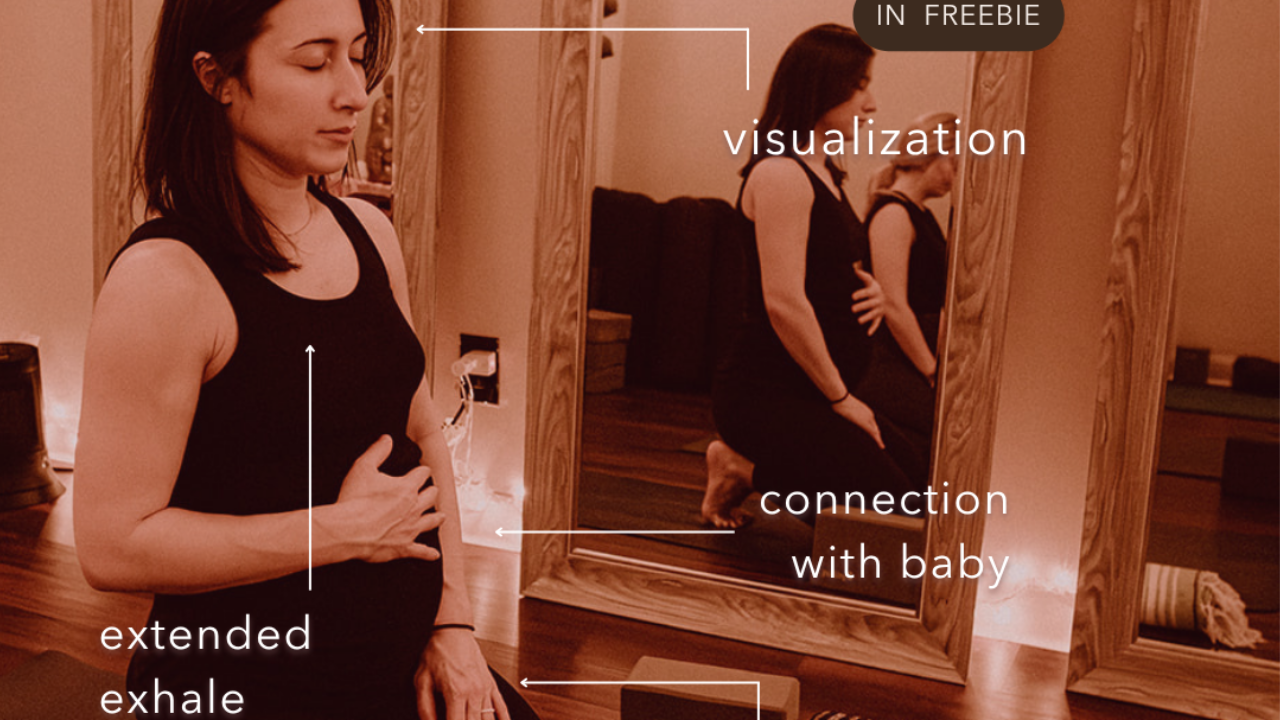
The women who come to see me are exhausted. They're tired in a way that a full night of sleep somehow does not reach. In my prenatal yoga classes I hear it in a different register: a woman mentioning that her memory isn't as sharp lately, that it frustrates her, that she feels less like herself. And in the intake conversations before massage sessions, there is often another thread underneath — a kind of doubt that sounds like "the plan was to go back to work after maternity leave, but now I'm not so sure anymore." A recalibration happening not just in the body but in the whole sense of what is possible and what is wanted.
None of this is weakness. All of it is information. And understanding what is actually happening physiologically can change the relationship a woman has with her own experience. Not because knowledge fixes anything, but because when the confusion or criticism lifts, there is finally room to receive care.
Here is what I tell the women who ask me why they feel this way.
What is happening in your nervous system
During pregnancy, the sympathetic nervous system — the branch governing your stress response and vigilance — becomes significantly more active. Published research in Experimental Physiology confirms that healthy pregnancies are associated with striking increases in sympathetic nerve activity, a unique period researchers describe as apparent healthy sympathetic hyperactivity. Your body is scanning for threat, staying alert, protecting the life growing inside you. That is not malfunction. That is ancient protective intelligence doing exactly what it was built to do. Obgyn-care
The challenge is that this level of activation, sustained around the clock without adequate support, is also exhausting especially in this day and age. Which is why so many pregnant women describe a tiredness that sleep alone cannot touch. What the body is missing is not more rest. It is regulation.
What is happening in your brain
At the same time, your brain is restructuring itself for motherhood through a process called synaptic pruning. In a landmark 2016 study published in Nature Neuroscience, neuroscientist Elseline Hoekzema and her team found widespread reductions in gray matter across the brains of first-time mothers. The cultural response was immediate and unkind, with headlines declaring that pregnancy makes women less intelligent. But Hoekzema's own conclusion was the opposite: the reductions represented an adaptive process, the same mechanism that makes adolescent brains more efficient, not less. Her team found no cognitive deficits. The brain was not degrading. It was reorganizing. YouVeda
The areas showing the most pruning were specifically related to the theory of mind network — the part of the brain responsible for understanding what others are thinking and feeling — which researchers speculate may enhance a mother's ability to read and meet her infant's needs. When women in the study were shown photos of their own babies, the areas most affected by gray matter changes were also the areas that lit up most in response. Dr. Jasna's Ayurveda
When women apologize to me mid-session for losing their train of thought or coming off as scattered, I find myself thinking about this research. Their brain is not failing them. It is becoming something it has never been before — more attuned, more finely tuned for what is coming. And I reassure them there's nothing to be sorry about. I'm grateful to be that listening ear and sounding board during an uncertain time.
What Ayurveda understood five thousand years ago
What strikes me every time I read about Ayurveda and pregnancy is how much the ancient understanding aligns with what modern research is now confirming — and what the women on my table have been telling me all along. In Ayurveda — a system of medicine over five thousand years old that modern science is only now beginning to validate — pregnancy is considered a time of heightened vata, the energy of air and movement. When vata rises without sufficient grounding to balance it, it manifests as anxiety without a clear source, a scattered mind, cold extremities, and trouble settling even when exhausted. Every pregnant woman I have described this to has recognized herself in it immediately.
The Ayurvedic antidote is specific: warmth, weight, slowness, and touch. Warm food. Oil on the skin. A longer exhale than inhale. The steady presence of someone else's hands. These are not wellness trends — they are a five-thousand-year-old understanding of what a nervous system in the vata state needs to return to itself. I bring this into every prenatal session, not as a concept to explain, but as an experience to offer.
Your baby's nervous system is in conversation with yours
Research confirms that your baby's nervous system co-regulates with yours in the womb. The hormonal and neurological environment you are living in is the environment your baby is developing inside. The women in my practice who struggle most with receiving care — who feel guilty resting, who believe they should simply push through — often soften when they understand that tending to themselves is also tending to their baby. It was never separate.
What regulation actually looks like
Regulation is not a permanent state of calm. It is the capacity to return to center, again and again, as life keeps asking things of you. The practices that actually build that capacity are simpler than most people expect. The extended exhale, breathing out twice as long as you breathe in, activates the parasympathetic nervous system directly. Warm touch on the skin signals safety through the body's largest sensory organ. Slow, body-led movement helps discharge what the sympathetic nervous system has been accumulating rather than compressing it further inward.
These practices are at the heart of everything I teach and they are the foundation of the free prenatal guide I created for women who want somewhere to begin. Your Body Already Knows includes three audio-guided practices — the Bond Breath, Sensitize, and the Pelvic Sequence — that can be done anywhere, without equipment, without carving extra time from a day that is already full. Download it free here.
Working together in person
If you are pregnant and in the Newark, Delaware area or anywhere in the Delaware, Pennsylvania, and Maryland tri-state region, prenatal massage is one of the most direct ways to support nervous system regulation during this season. The body learns safety through experience, not through understanding it. What I offer on the table is exactly that — an experience of being held while your nervous system remembers what it feels like to soften.
Sessions in Newark, DE.
90 minutes $210.
120 minutes $280.
Book at thresholdbody.com.
Monica Seligmann is a Licensed Massage Therapist, Prenatal Yoga Teacher, Doula, and Feminine Embodiment Coach based in Newark, Delaware. She is the founder of The Threshold Body — bodywork, yoga, and ritual for women at every threshold of womanhood.
Click the below button for Book a session in person or to checkout the online services and products. thank you!
Stay connected with news and updates!
Join our mailing list to receive the latest news and updates from our team.
Don't worry, your information will not be shared.
We hate SPAM. We will never sell your information, for any reason.